 Middle East
 Egypt· Cairo
Archaeological Discoveries in Egypt Reveal Early Farmer Organization
Recent archaeological findings in Egypt, including ancient tools, shed new light on the organization and labor practices of early Egyptian farmers.
Background
Egypt's rich archaeological heritage consistently provides insights into ancient civilizations. Ongoing excavations across the country contribute to understanding early human societies, their development, and daily life, offering valuable historical context.
Quorum · collective opinions
Archaeological Discovery in Egypt
First report 57m agoLast update 57m agoThe discovery of a large, ancient complex using satellite imagery is highlighted as a significant archaeological find.
Archaeological Discoveries in Egypt
First report 6h agoLast update 57m agoExcavations in Saqqara have uncovered decorated tombs with rare artifacts, providing insights into the lives of ancient Egyptian officials.
Archaeological finds reveal details about the organization of labor and tool-making in pre-dynastic Egypt, indicating sophisticated societal structures.
Fossil discoveries in Egypt suggest North Africa may have been a primary cradle for ape evolution, challenging previous theories.
Historical use of ground-up Egyptian mummies as medicine is being studied, with modern analysis revealing some protective compounds but overall ineffectiveness.
Archaeological Discoveries in Egypt Shed Light on Ancient Life and Evolution
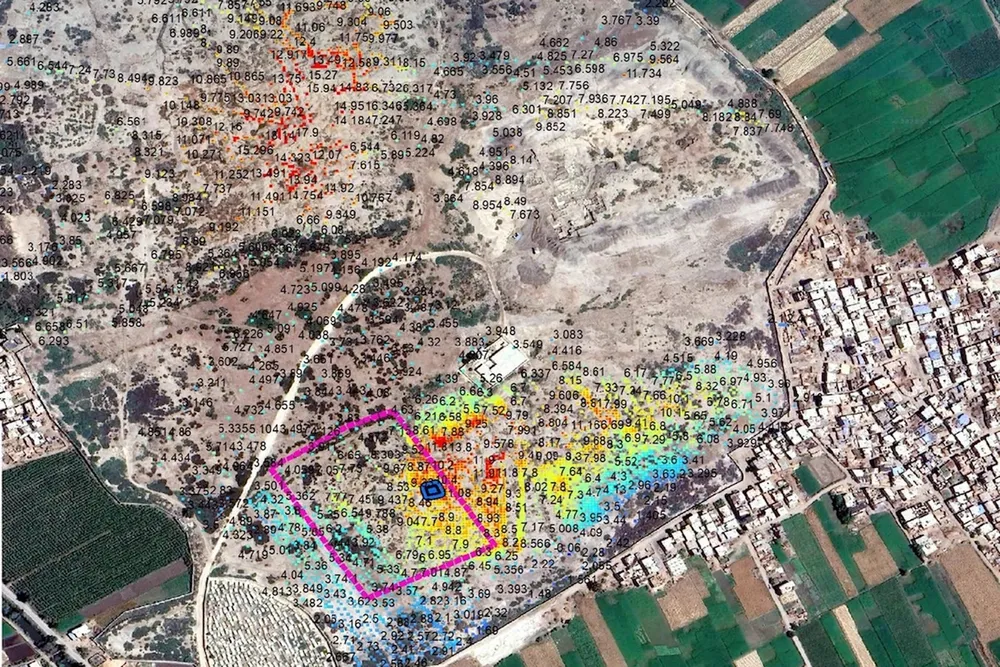
First report 6h agoLast update 1h agoFlint tools discovered in Egypt suggest that farmers organized their labor and relied on specialist toolmakers before the pharaonic era.
The discovery of an 18-million-year-old ape fossil in Egypt suggests that North Africa, rather than East Africa, may have been the cradle of ape evolution.
Historical accounts and biblical narratives involving Egypt are discussed in relation to famine, labor, and interactions with other ancient civilizations.
A re-examined gharial fossil from Egypt, missing its nose, has led to the discovery of a new species.
Historical medical practices in Egypt involved prescribing ground-up mummies, though modern analysis shows limited effectiveness.
Archaeological Discoveries in Egypt
First report 6h agoLast update 2h agoArchaeologists in Egypt have discovered a decorated tomb belonging to an Old Kingdom official, containing rare artifacts.
The discovery of an 18-million-year-old ape fossil in Egypt suggests North Africa may have been a crucial region for ape evolution, potentially impacting theories on human origins.
Archaeological Discoveries in Egypt
First report 2h agoLast update 2h agoA decorated tomb of an Old Kingdom official, Weni, has been found at Saqqara, Egypt, containing artifacts.
Archaeological Discoveries in Egypt
First report 2h agoLast update 2h agoDiscovery of a decorated tomb belonging to an Old Kingdom official named Weni in Saqqara, Egypt, with associated artifacts.
A request has been made for Glasgow Museums to return the mummified remains of an ancient Egyptian priest to Egypt.
Archaeological Discoveries and Historical Insights in Egypt
First report 6h agoLast update 2h agoNew archaeological finds, such as the tomb of Weni and ancient ape fossils, are being reported, offering fresh perspectives on ancient Egyptian life and human origins.
Ancient Egyptians used ground mummies as medicine, with recent studies showing some limited protection against influenza viruses, though scientifically ineffective.
There is a sentiment that mummies should be returned to Egypt and reburied appropriately, reflecting a respect for cultural heritage.
Historical and Archaeological Discoveries in Egypt
First report 6h agoLast update 3h agoFlint tools discovered in Egypt reveal how farmers organized labor before the pharaohs.
Historically, ground-up mummies were prescribed as medicine, with recent studies showing some limited, though ineffective, protection against influenza.
Discussions about ancient Egyptian practices, including parties and the significance of hieroglyphs for recording events.
Ancient Egyptian History and Discoveries
First report 6h agoLast update 3h agoFlint tools reveal insights into pre-Pharaonic Egyptian farmers' organization and labor division.
Ancient Egyptians used ground mummies as medicine, with modern analysis showing plant resins and aloe, though scientifically ineffective.
An 18-million-year-old ape fossil found in Egypt suggests a more significant role for North Africa in human lineage evolution.
Egypt and Israel have been top recipients of foreign aid since the late 1970s, with reasons not solely based on 'need'.
Archaeological Discoveries in Egypt
First report 4h agoLast update 3h agoFlint tools discovered in Egypt provide insights into how farmers organized labor before the pharaonic era.
Ancient Egyptian Discoveries Shed Light on Early Labor and Medicine
First report 6h agoLast update 3h agoFlint tools suggest ancient Egyptian farmers relied on specialist toolmakers before the pharaonic era, indicating a division of labor.
Historical use of ground mummies as medicine is scientifically ineffective, though some components showed minor protection against influenza.
There is a sentiment that mummies should be returned to Egypt and reburied appropriately.
iWitness comments
No comments yet — be the first to weigh in.